On March 30, 2017, Florida’s Supreme Court published its opinion of Hooker v. Hooker, 42 FLW S396 (Fla. 2017) that resolves the conflict between Hooker v. Hooker, 174 So.3d 507 (Fla. 4th DCA 2015) and Merrill v. Merrill, 357 So.2d 792 (Fla. 1st DCA 1978).
The Supreme Court determined the appropriate standard of review to determine the donative intent and determination of inter-spousal gift is “competent and substantial evidence” as opposed to a preponderance of the evidence standard.
When the 4th DCA reversed the trial court’s decision that the Husband made an inter-spousal gift, it erred by reweighing the evidence under a “preponderance of the evidence” standard. The 4th should not have substituted their opinion for the trial court in reviewing the trial court’s findings of donative intent. Instead, the 4th should have deferred to the trial court’s findings and simply determined whether the findings were supported by the record, as would have been appropriate under the “competent and substantial evidence” burden.
The Supreme Court concluded the 4th substituted its own judgment and findings of fact as to whether an inter-spousal gift existed.
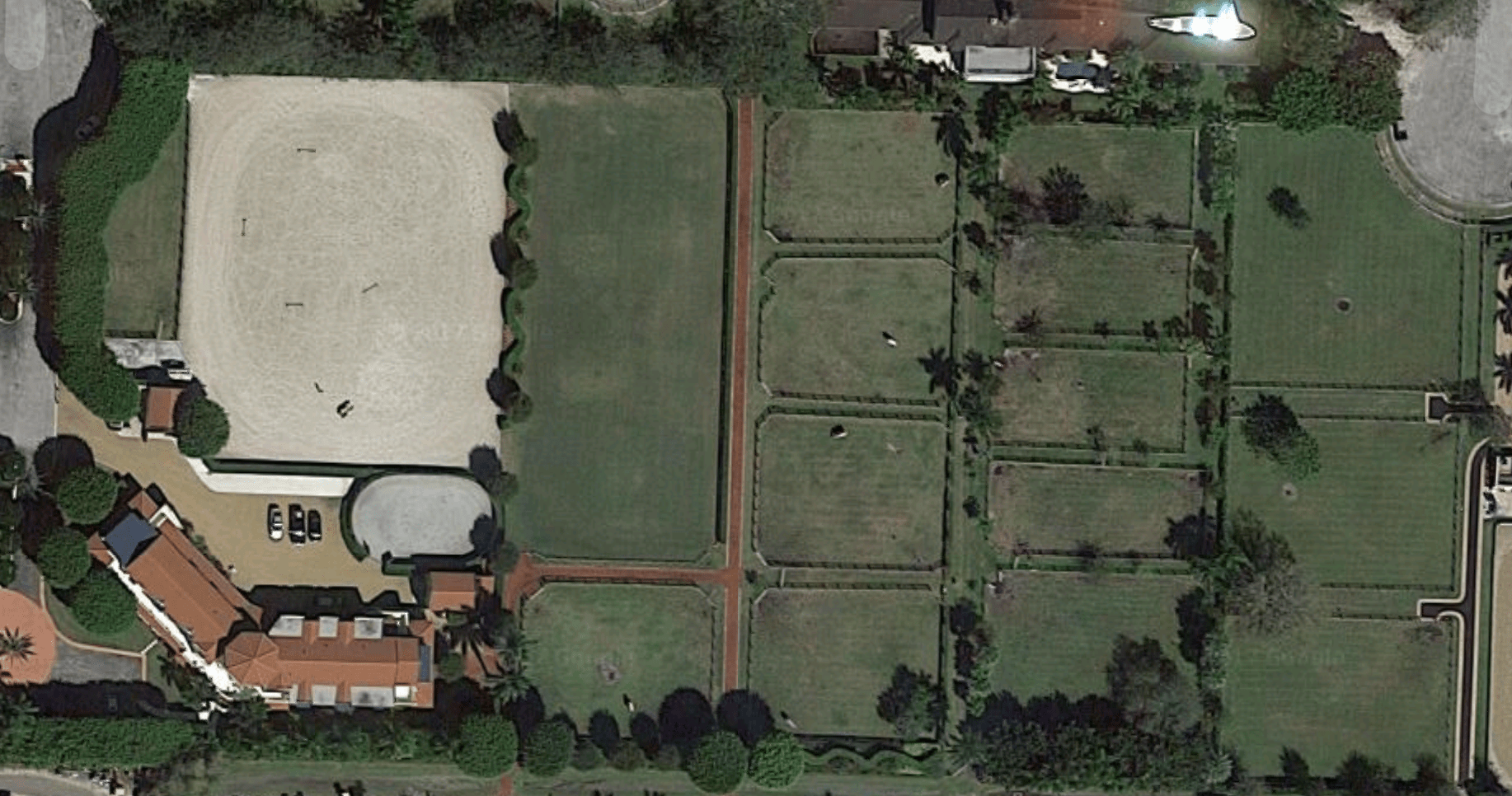
At issue was the Wellington Farm and residence of Tim (Timothy I. Hooker) and Nancy Hooker known as “Hooker Hollow Place”.
The facts are as follows:
- Parties married in 1989 and executed a valid prenuptial agreement which provided each party would retain their premarital properties and appreciation in the event of a divorce.
- Both parties had independent sources of income from their family inheritances and they maintained independent finances through the marriage.
- Parties loved everything equestrian (training, boarding and showing) and this was the center of their marriage and day to day activities.
- Tim purchased property before the marriage in part with his Father’s lottery winnings.
- At time of purchase, land was vacant. At time of divorce the property now known as “Hooker Hollow Place” was a working horse farm with 16 stalls, tack rooms, a jump field, paddocks and two residential wings. One wing was for Tim and Nancy and the other for their children and staff.
- Tim did not tell Nancy one way or another whether she owned the marital residences.
- The evidence was the parties “treated” their residential properties as marital assets.
- Both parties signed the mortgage on the property.
- Wife signed deed for property to be transferred to a business entity formed during marriage.
- The property was the parties’ marital residence throughout their marriage and the place where they raised their children.
- The trial court concluded that even though the property was purchased, financed and primarily paid for by Tim with his non-marital assets it nonetheless should be considered a marital asset.
When the Tim sold the property for $4.5 million dollars, and Nancy learned he was not sharing the proceeds, Nancy filed for divorce.
Should Hooker Hollow Place be a marital asset?
The circuit judge thought so.
In my opinion, it’s a pretty close call. If I were the decision-maker I might have concluded differently.
However, based on “burden” the circuit court judge’s decision should not have been reweighed as the 4th did in this case and was appropriately quashed by the Supreme Court.
Some married couples are crystal-clear in the manner in which they title their property and scrupulously maintain the title; others are more lax and blasé about the property. As a result you end up with interesting cases like Hooker, where the parties were not clear in their titles, yet their intentions weighed heavily. As a result, the Hooker case should make us aware we should clearly address inter-spousal gifts when we write prenuptial agreements as well as when we advise our clients.


 Stephens & Stevens Marital & Family Law
Leave a comment