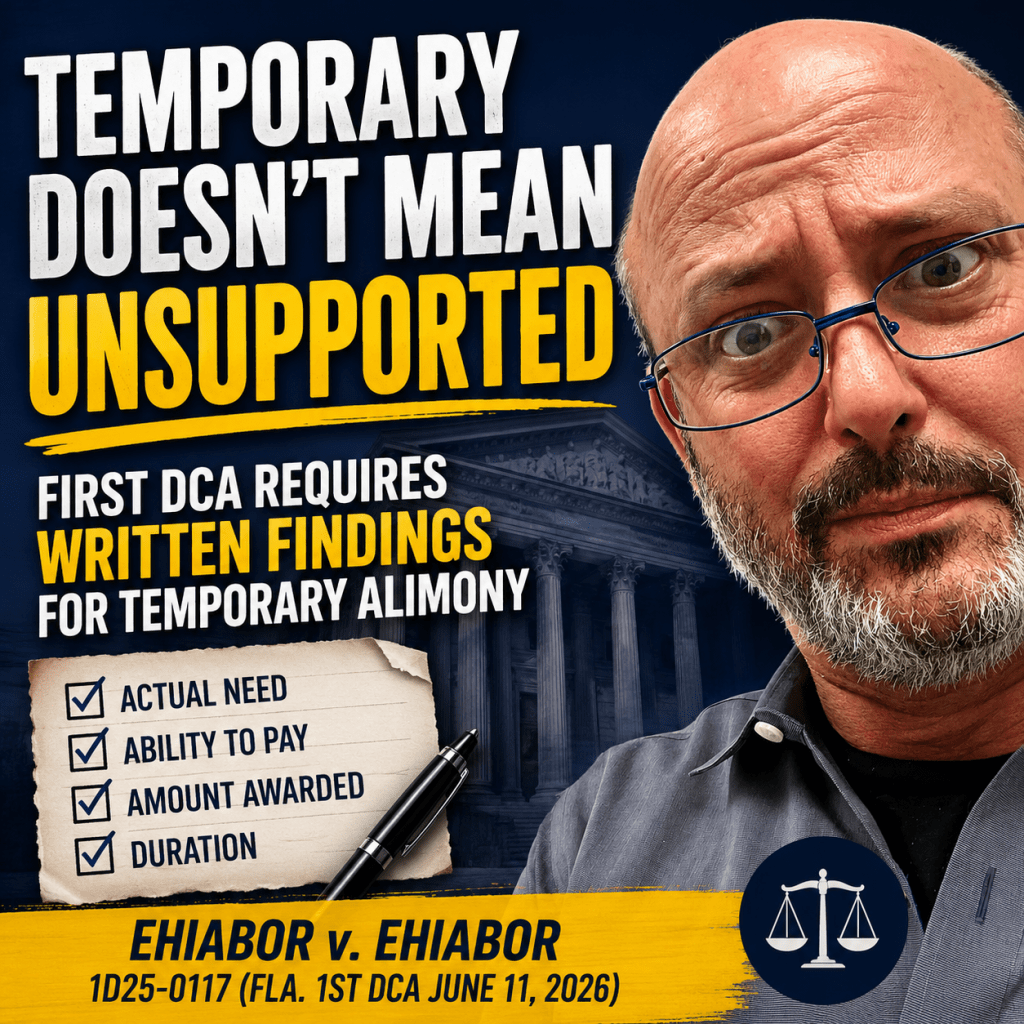
Ehiabor v. Ehiabor, 1D25-0117 (Fla. 1st DCA June 11, 2026)
The First DCA just handed family lawyers an important reminder that Florida’s 2023 alimony reforms changed more than the types of alimony available—they also changed what trial judges must put in their orders.
In Ehiabor, the trial court increased the Wife’s temporary alimony by $700 per month and awarded $50,000 in temporary attorney’s fees. The husband appealed. The First DCA reversed the temporary alimony award and remanded for further findings.
The big takeaway is this:
Temporary alimony now requires written findings of fact.
Prior First DCA authority (Williams v. Williams) had held that temporary alimony under section 61.071 did not require the same written findings applicable to other forms of alimony. The court recognized that the Legislature changed the landscape in 2023 by expressly placing temporary alimony within section 61.08 and requiring written findings supporting an alimony award.
The First DCA harmonized sections 61.071 and 61.08 and held that before awarding temporary alimony, the trial court must make written findings regarding:
- The recipient’s actual need;
- The payor’s ability to pay;
- The amount awarded; and
- The duration of the temporary alimony award.
The court emphasized that the findings need not be as extensive as those required for bridge-the-gap, rehabilitative, or durational alimony, but there must be enough in the order to permit meaningful appellate review.
The First DCA also addressed preservation. Because Rule 12.530 now only requires rehearing motions to preserve omitted findings in final judgments, a party appealing a nonfinal temporary support order is not required to first file a motion for rehearing before raising the issue on appeal.
For years, many temporary support orders contained little more than a dollar amount and a payment date. After Ehiabor, that approach is dangerous. If the order does not explain the recipient’s need, the payor’s ability to pay, and the basis for the amount awarded, it may not survive appellate review.
 Eddie Stephens - Family Law
Leave a comment